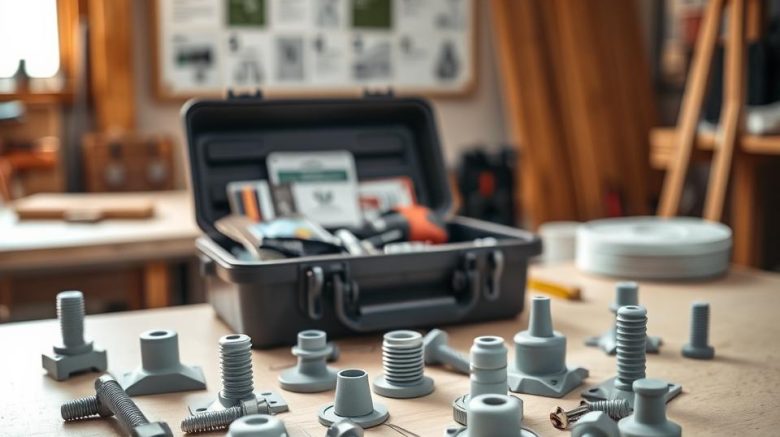
When you need to mount shelves, mirrors, or TVs, a drywall anchor kit is essential. Standard gypsum board cannot hold significant weight; screws might slip or pull out. This poses dangers of damage or harm. A good quality anchor kit provides the necessary hardware for a variety of tasks.
Best Prices On Mounting Screws Drywall
High-grade collections feature a range: threaded anchors, toggle bolts, hollow wall anchors, and plastic expansion anchors, alongside a choice of fasteners. Consequently, you have the means to deal with various loads and wall types efficiently.
Brands like CrimsonMark, Toggler Snaptoggle, KIRUI, AKKTOL, Ansoon, E-Z Ancor, and Everbilt are top-rated for their robustness and trust. Installation Parts Supply.com is a leading supplier for comprehensive anchor collections and drywall screw mounts. It serves DIYers and householders alike.
This article is designed to give U.S. homeowners, renters, and DIY builders with straightforward, actionable advice. It highlights choosing and using a drywall anchor kit for safely installing items.
Why Drywall Anchors Matter For Safe Mounting
Drywall is common in U.S. homes, consisting of a plaster core and paper facing. However, it lacks strength for bearing weight by itself. Simply driving a screw directly into the board leads to damage. Using correct anchors and screws avoid these problems, guaranteeing a secure hold.
The Limitations Of Standard Drywall
Standard 1/2″ gypsum board cannot handle medium or heavy weights without support. A naked screw may hold for a moment but eventually, the plaster interior will give way. This causes the fastener pulling out. For items like cabinets, TVs, and shelving, this could mean abrupt detachment.
Hazards Of Poor Mounting Techniques
Mounting items with simple nails or unanchored screws heightens the chance of slips and wall damage. Weighty items can fall, which can hurt people and damaging belongings. Unanchored furniture creates a tip-over risk, particularly in households with kids.
Choosing The Best Anchor For Your Task
Choosing the right anchor depends on the load and motion. Light decor approximately 20–25 lb is best suited for plastic expansion plugs. Mid-weight items near 75 lb need a screw and anchor combo like a screw-in anchor. Molly bolts or metal sleeve anchors are great for roughly 65 lb medium-duty fixtures.
For heavy items like big cupboards, televisions, and shelves, high-capacity toggle or Snaptoggle anchors are critical, supporting more than 200 pounds when properly installed. Check the specs on the box and check wall type prior to starting. Many sets provide a range of sizes to find the right fastener length and specific gypsum screw anchor for the job.

A Guide To Various Anchors And Kit Options
Picking the best anchor involves understanding how each type grips drywall and the hardware included in a set. A comprehensive drywall anchor kit or screw anchor kit simplifies tasks, from hanging art to installing shelves. We will discuss common options, highlighting the importance of a drywall screw holder or an organized screw and anchor set.
Self-Drilling Hardware And Sets
Self-drilling anchors, available from brands like Ansoon and CrimsonMark, are available in plastic or metal‑reinforced nylon. They are screwed directly into drywall without a pilot hole, typically holding up to 75 lb based on anchor size and board depth.
Sets featuring these fasteners, compatible screws, and a labeled drywall screw holder enable fast, tidy setups. These kits, with different dimensions, simplify choosing the correct size for frames, shelving, and lights.
Toggle Anchors And Heavy-Duty Screw Anchor Kit Solutions
Toggle bolts, such as the Snaptoggle style, distribute weight behind the surface. This technique carries significant weight, like televisions, cupboards, and lighting. The Snaptoggle brand, for instance, can support up to 238 lb in gypsum board, with stronger limits for concrete or brick.
Robust anchor sets usually contain snap toggles, winged toggle bolts, and longer screws for thick panels. These steel parts limit wiggling, guaranteeing secure installation for large objects.
Metal Sleeve Anchors And Molly Bolts
Molly bolts, expanding metal anchors, open up when set. Typically made of zinc‑plated carbon steel, they require a pilot hole. A properly fitted molly holds roughly 65 pounds, making it suitable for mid-sized loads like cabinets.
Sets come with installation tools and various lengths, enabling exact matching of anchor size to load and wall thickness. Reusable models provide easy modification without enlarging holes.
Ribbed And Push-In Anchors For Small Weights
Plastic plugs, available at retailers like The Home Depot, are simple to install. They push or twist into small pre-drilled holes, generally carrying 20–25 lb.
These plugs are perfect for hanging small frames, blinds, and light décor. Comprehensive screw anchor kits often contain a mix of these anchors, with proper screws and a screw holder for efficient decor installation projects.
Selecting The Best Drywall Anchor Set For Your Job
Selecting the best anchor set requires preparation. Consider the item being mounted, the dynamics at work, and the wall’s material. A thoughtful choice of screw and anchor can save time and avoid damage.
Evaluating Load And Movement
Begin by figuring out the item’s weight. Use static weight as a baseline, then account for potential movements like pulling or shaking. Objects like drapery rods or shelving, which might move or bear additional weight, require a larger safety margin.
For mid-range weights, pick fasteners with a 75 pound limit for drywall. For substantial loads, utilize toggle bolts or strap anchors certified for over 200 lb. Always verify the anchor’s compatibility with the surface.
Considering Wall Type And Thickness
Identifying your wall’s material is essential. A drum-like sound typically signifies drywall, whereas a hard thud indicates brick or plaster. Each requires specific anchors and drill bits.
Standard interior drywall is usually half an inch thick. Thicker 5/8 inch walls or double-layered constructions need longer anchors. Toggle anchors and molly bolts need enough space behind the wall for proper deployment. Use concrete or masonry anchors for masonry walls.
Checking Kit Components And Layout
Seek kits that provide a variety of anchor types: threaded anchors, plastic ribbed anchors, sleeve anchors, and toggle bolts. Ensuring that screws fit the provided anchors avoids installation headaches.
Good sets boast organized compartments, installation aids, and clear guides. Well-organized boxes, such as ones by Installation Parts Supply.com and KURUI, keep components at hand during work.
| Anchor Type | Ideal Usage | Typical drywall rating | Included with a quality kit |
|---|---|---|---|
| Self-drilling anchor | Medium loads, shelving | 10 to 50 lbs | Various sizes, screws, bit |
| Plastic ribbed anchor | Lights, frames, decor | 5 to 25 lbs | Varied diameters, short screws, labels |
| Molly bolt | Mid-weight items, bars | 50–150 lb | Various lengths, tool, screws |
| Toggle Bolt / Snaptoggle | Heavy items like TVs and cabinets | 100 to 300+ lbs | Toggles, bolts, instructions |
| Masonry anchor | Concrete, brick, stone | Varies by anchor and substrate | Masonry screws, bit details |
Essential Tools And Supplies For Installation
Begin with the essentials: power drill and assorted bits. You need these for creating pilot holes and securing anchors. Add a manual driver or fitting bits to firmly install bolts without damaging them.
Use a stud finder for heavy loads, and a measuring tape plus a long level for accurate marking and leveling. Essential: put on safety goggles to protect your vision during drill and cut operations.
Keep pliers and a hammer ready for extracting fasteners and for gentle taps. A drywall screw holder will keep screws straight, making installations quicker.
Select a screw anchor kit appropriate for the load and wall type. Ensure it includes various anchors like threaded, mollies, and plastic ribbed ones for any job.
Organize your hardware in a clear box. Mark your bits with painters tape for correct depth and to safeguard surfaces during work.
For securing furniture, use safety straps or angle brackets. Drive screws into studs for secure stud holding. Heavy pieces shouldn’t rely solely on standard anchors for stability.
A helpful hint: for pilot holes, pick a drill bit smaller than your anchor and indicate depth with tape. Keep a marked kit of frequent-use fasteners for rapid maintenance.
Having an organized screw anchor kit and proper tools speeds up installation and minimizes wall damage.
Installation Instructions For Popular Anchors
Follow these steps to ensure robust mounts with either a wall anchor set or a basic screw and anchor kit. The guides cover steps for threaded anchors, toggle bolts, molly bolts, and plastic plugs. Choosing the correct drywall screw mounts reduces the chance of redoing work and wall damage.
Installing Self-Drilling Drywall Anchors
First, mark your intended spot and align the anchor with the wall. These anchors generally don’t require pilot holes.
Grab a driver, or utilize a drill at a slow speed, to drive the anchor in until level with the surface. Then, drive the screw and fasten it just until it’s secure. Be careful to halt before it strips or ruins the board.
Installation Of Toggle Systems
Begin by boring a hole based on the toggle manufacturer’s guide. Then, push the metal bar through the hole, and pull the strap to ensure it lies flat behind the wall surface.
Following the specific instructions, either snap or trim the plastic legs. Proceed to drive the screw into the channel. Toggle anchors disperse the weight more efficiently, perfect for hanging hefty items. Make sure the cavity depth is deep enough to hold the anchor mechanism.
Installation Guide For Molly Bolts
Drill a hole that matches exactly the molly bolt’s sleeve. Insert the bolt, subsequently turn the screw to flair the sleeve, or use a specialized setting tool from the set if available.
This process makes the anchor clamp against the back of the wall, holding it fast. Mollies are good for medium-weight tasks like mounting shelving or bathroom cabinets. Fortunately, the bolt can be removed and reused if necessary.
Using Ribbed Anchors For Light Objects
Drill a hole slightly smaller than the anchor diameter or push in the plastic anchor and hammer it gently. After that, fasten the screw until tight.
Plastic ribbed anchors slightly expand to support light loads like frames or decor, supporting about 20–25 lb in regular sheetrock. They’re ideal for light duty use due to the minimal, easily repaired wall damage they cause.
Using Drywall Anchor Kit Examples For Specific Projects
When choosing anchors, consider the item and the surface material. An effective screw anchor kit offers a variety of anchors and screws. This guarantees you have the right solution for various fixtures.
When hanging wall shelves
For installing shelves and drapery poles, choose self-drilling anchors or molly bolts. Look for ratings of about 65-75 pounds each. Make sure to spread the load across several anchors and stick to the spacing guidelines. Companies such as E-Z Ancor and KURUI are recognized for selling reliable fasteners ideal for this.
Putting up heavy gear
Hanging heavy loads needs toggle bolts or stud mounting. Options like Snaptoggles and standard toggles offer superior strength compared to regular plugs. Use studs when possible by screwing into them. If studs aren’t an option, pick a high-grade screw anchor kit with strong toggle bolts for a secure mount.
Hanging light pictures and decorations
Lighter objects like photos and trinkets are best with plastic ribbed or push-in anchors. These should be rated for 20 to 25 pounds. These types minimize damage with tiny openings, simplify removal, and are frequently found in kits from brands like Everbilt. Use several anchors for collections to maintain a balanced look.
Securing furniture against tipping
To prevent furniture from tipping, secure it with heavy-duty screws or dedicated straps. Don’t depend only on regular plastic plugs. Use anti-tip straps or L-brackets screwed into studs. Or, specialized kits offer the right tools. For renters, ask your landlord prior to installing and select hardware that meets code.
Guide To Safety, Removal, And Upkeep Of Wall Anchors
Begin with a careful check of every mount. Give a firm pull on mounted items to notice any give. For items bearing heavy weight, add weight gradually as per the guide, testing as you go. Additionally, think about door slamming vibrations or regular handling. Such dynamics require a strong fastener with an correct anchor.
For safety, escalate the testing weight slowly, step-by-step. An object might seem secure at first but fail with continuous use. Switch to a stronger anchor system if there’s any give during these tests.
Removing fasteners while preserving your wall’s integrity requires identifying the anchor. If dealing with common plastic or self-drilling types, insert a screw partway, then grab with pliers to pull it out cleanly. This technique usually leads to little damage.
Plaster walls require a soft touch. Apply a wooden block against the wall to disperse force and prevent cracking. With threaded molly bolts, unscrewing partially straightens the sleeve, facilitating a clean extraction.
For Snaptoggle and similar models, stick to the maker’s instructions for removal. You might need an internal mechanism released or the strap cut for extraction. If removal is impossible, snap the bolt, push the rest in, and patch as needed.
To mend tiny holes, employ spackle and sand for a smooth finish. Repair larger areas with a mesh patch and joint compound, ensuring the area’s integrity is restored before reusing of screws and anchors.
Decide to reuse anchors based on their current state. Anchors from reliable brands like Toggler or sturdy metal molly bolts are can be used again if perfectly intact. Discard and replace any that are split, cracked, or have weakened.
With heavy furniture or fixtures, the risks are significant. Avoid reusing lesser anchors. Switch to hardware designed for wall studs or a high-capacity screw and anchor set. Choosing the right hardware lowers risk and ensures safety.
| Task | Advice | Replacement Time |
|---|---|---|
| Testing Stability | Incremental weight checks and gentle tugs | If the anchor shifts or creaks under test |
| Removing Plugs | Partially insert screw, pull with pliers | If it bends or sticks |
| Remove molly/toggle | Collapse sleeve or follow manual | If damaged or stripped |
| Fixing Plaster | Protect wall with wood block | If plaster cracks or crumbles |
| Reusing Parts | Check for wear; prefer new parts for critical loads | For furniture or heavy mounts, always use new mounting screws and anchors |
| Buying Kit | Select kit with ratings and sizes | Replace kits that lack proper size options or rated anchors |
Final Thoughts
A quality anchor set can make a shaky mounting job secure and safe. For lightweight items, plastic plugs work fine. Mid-weight shelving are best suited for toggles or mollies. Heavy objects like televisions and cupboards usually require stud installation or heavy-duty fasteners. A clearly labeled kit simplifies choosing the right part by showing weight limits and dimensions.
Begin by inspecting the wall type and depth. Then, choose a kit that gives specific ratings. The right equipment—a drill/driver, a stud sensor, and a level—are crucial. Strict adherence to the guide ensures safe placement.
To prevent furniture from tipping over, attach it to studs using furniture straps or metal angles. Standard anchors aren’t strong enough for furniture. Choose quality sets and premium parts to have confidence in your work. After fitting anchors, test the hold and replace if they’re not secure or damage.
Selecting the best anchor set and equipment is vital for keeping safe your walls and belongings. Always opt for premium components, adhere to the instructions provided, and test the strength on installations. Doing this leads to a safer home and lasting results.